
I am a Senior Researcher at the Berlin office of the Institute for Peace Research and Security Policy (IFSH), University of Hamburg. I remain an Associate Professor at the Naval Postgraduate School (on sabbatical leave).
I study how technology shapes cooperation and competition among nations.
My move to Berlin in January 2026 put me close to one of the clearest cases of this: Europe is rearming quickly, and many of its most consequential investments—from space systems and cyber capabilities to AI and drones—blur the line between civilian and military use. My current work with Jane Vaynman examines how this dual use overlap reshapes the way states arm, opening new room for deception and straining the old logic of arms control. The aim is to sort out which technologies still underwrite deterrence, which let states reassure one another, and which quietly raise the risk of conflict.

Core Research
My research focuses on how the dual use nature of technology shapes arming and arms control dynamics in world politics. The foundation is an article with Jane Vaynman in International Organization, where we show that two attributes govern the prospects for arms control: how easily observers can distinguish military from civilian uses, and how deeply a technology is integrated across the defense and commercial sectors. Drawing on original data across every technology states have used to arm in the modern era, we find that many capabilities central to great-power competition fall into a “dead zone,” for arms control. The framework specifies options for AI governance and biological weapons arms control.
Book Manuscript
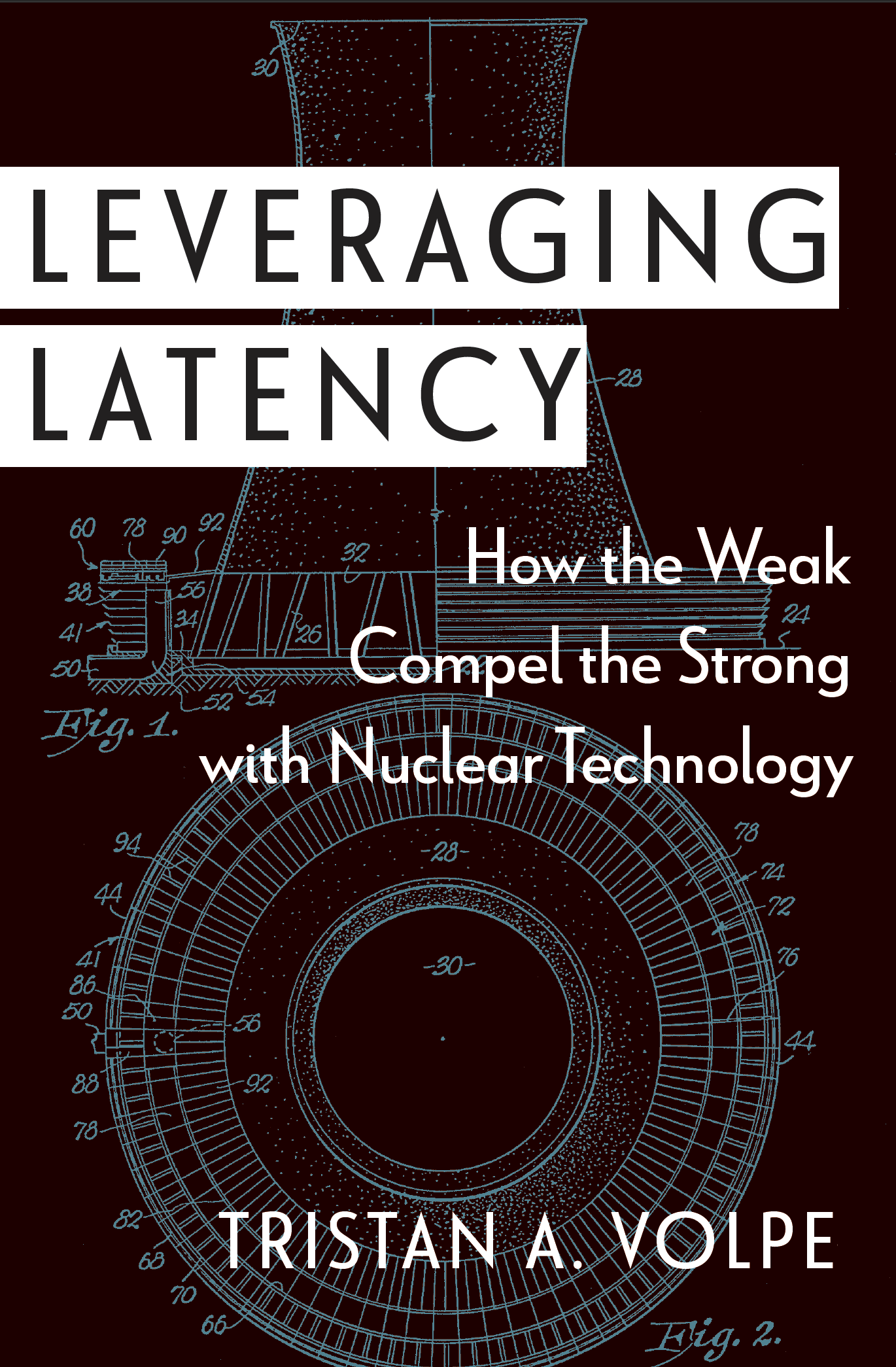
My book explains how the weak coerce the strong with nuclear technology. In Leveraging Latency: How the Weak Compel the Strong with Nuclear Technology (Oxford University Press, 2023), I show how small states turn nuclear latency—the bomb-making capacity bundled into civilian nuclear programs—into leverage over larger superpowers. This is dual use deception at work: the same blurring of civilian and military uses that makes the technology so hard to control also provides cover for coercion. Yet it hinges on a credibility dilemma. A state needs just enough latency to make the threat of proliferation real, but not so much that its assurances of restraint ring hollow.
About Me
My work has appeared in peer-review journals such as International Organization, Security Studies, and the Journal of Strategic Studies. I also write for general policy audiences in outlets such as Foreign Affairs, The Washington Quarterly, and War on the Rocks.
I am based in Berlin. Previously, I worked on the Monterey Peninsula in California and held fellowships at Lawrence Livermore National Laboratory and the Carnegie Endowment for International Peace. I received political science degrees from the George Washington University (Ph.D.) and the University of California, Los Angeles (B.A.). You can reach me via volpe[at]ifsh.de or download full my CV here.